
 Dehumidifiers
 Air Conditioners
 Vacuum Sealers
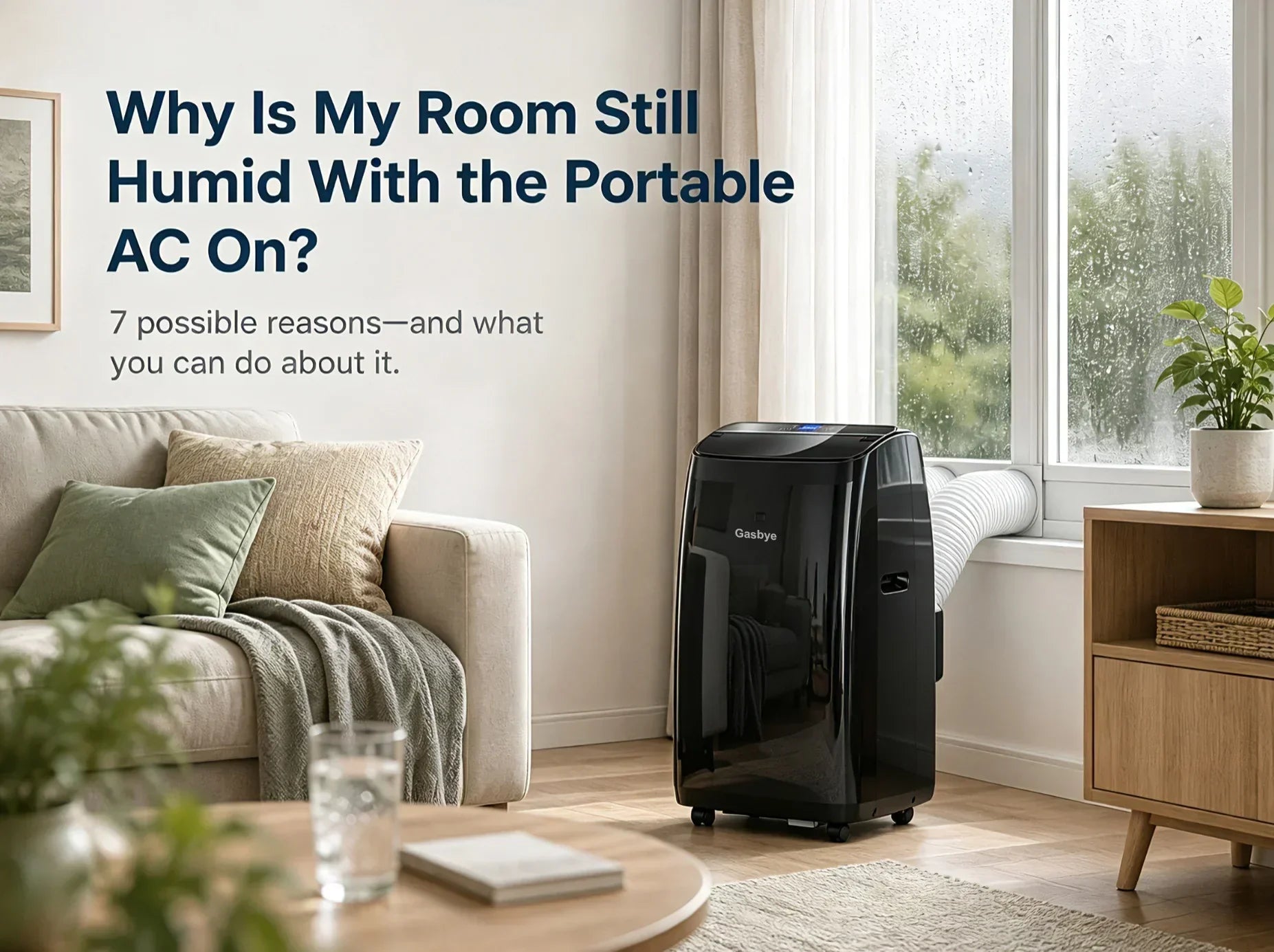
Your portable AC is running. The room is cooler. But somehow, it still feels sticky. You turn the temperature down, expecting the room to feel drier. Sometimes, that doesn't help. That's because cooling a room and removing moisture are related, but they are not the same thing.
A portable AC removes some moisture as it cools. But how much moisture it removes depends on the unit, how it is operating, the room conditions, and how much moisture is entering the space.
If your room feels cool but still humid, here are seven possible reasons to check.

Quick Answer: Why Is My Room Still Humid With the Portable AC On?
Your portable AC may be cooling the room without removing enough moisture.
This can happen because the unit isn't running long enough, the room has a high moisture load, humid outdoor air is getting in, the installation isn't set up correctly, or the unit needs basic maintenance.
Start by checking the actual relative humidity (RH) with a hygrometer. The EPA recommends keeping indoor RH between 30% and 50% and below 60% when possible.
If the room is already cool but the humidity remains high, lowering the temperature further may not solve the problem.
How Can a Room Be Cool but Still Humid?
Think about two rooms that are both 72°F. One has 45% relative humidity. The other has 65%. The temperature is the same, but the second room can feel much more damp or sticky.
That's because temperature and humidity measure different things. Temperature tells you how warm or cool the air is. Relative humidity tells you how much moisture is in the air compared with how much moisture the air can hold at that temperature.
A portable AC removes some of that moisture during cooling. But reaching the temperature you selected does not guarantee that the room has reached a comfortable humidity level.
How Humid Should a Room Be?
Before changing your AC settings, find out how humid the room actually is.
The EPA recommends keeping indoor relative humidity between 30% and 50% and below 60% when possible. A small digital hygrometer can help you monitor RH instead of relying only on how the room feels.
If humidity stays high, especially along with condensation, musty odors, or a persistent damp feeling, it's worth looking for the cause.
1. The Portable AC Isn't Running Long Enough
A portable AC removes moisture when moisture in the air condenses during the cooling process.
If the unit reaches the target temperature quickly and cycles off, it may have less opportunity to remove moisture than it would during longer periods of operation.
For example, your bedroom may reach 72°F fairly quickly. The AC stops or reduces cooling because the target temperature has been reached, but the room still feels sticky.
You could lower the thermostat, but that may make the room colder than you actually want.
What to look for: The room reaches the set temperature easily, but the humidity still feels uncomfortable.
If temperature is no longer the main problem, think about humidity separately.
2. The Room Is Adding More Moisture Than the AC Can Remove
Sometimes the portable AC isn't the problem. The room may simply be gaining moisture faster than the AC can remove it.
Common sources include:
-
Hot showers or baths
-
Cooking and steam
-
Drying wet clothes indoors
-
Wet towels or other damp materials
-
Open doors or windows during humid weather
-
Moisture from a basement or other damp area
What to look for: Humidity gets noticeably worse after cooking or showering, or the room feels much damper than nearby spaces.
If you can identify the moisture source, reducing it may help more than changing the AC temperature.
3. Humid Outdoor Air Is Getting Into the Room
Portable ACs work best when the room is reasonably enclosed.
If a door or window is left open, warm and humid outdoor air can continually enter the space. Your AC then has to work against both the incoming heat and moisture. This can be especially noticeable on hot, humid days.
What to look for: The room becomes noticeably more humid when a door or window is open, or you can feel warm air coming through gaps around the window.
When outdoor air is hot and humid, keep doors and windows closed as much as practical while the AC is running. Also check the window area for obvious gaps.
4. The Exhaust Hose or Window Installation Isn't Set Up Correctly
The exhaust system is an important part of a portable AC.
During cooling, the unit needs to send the heat it removes from the room outdoors. If the exhaust hose is disconnected, poorly installed, or venting into the room, the AC cannot operate as intended.
The window kit matters, too. Proper portable AC installation can help minimize gaps that allow outdoor air to enter the room and make it harder to maintain comfortable conditions.
What to look for:
-
Exhaust hose not connected securely
-
Gaps around the window kit
-
Hose venting somewhere indoors
-
Installation that does not match the manufacturer's instructions
Gasbye portable ACs use a dual-hose design. If you're using a dual-hose model, make sure both hoses are installed according to the instructions for your unit.
5. The Air Filter Is Dirty
A dirty filter is easy to overlook.
Portable ACs pull room air through the unit, so dust can build up on the filter over time. A dirty filter can restrict airflow and interfere with normal operation.
It doesn't automatically mean the filter is causing your humidity problem. But if cooling performance or airflow seems weaker than usual, the filter is one of the easiest things to check. For more troubleshooting steps, see our guide to common portable AC cooling problems.
What to look for: Reduced airflow or a visibly dusty filter.
Clean or replace the filter according to your model's instructions.
6. The Unit Has a Water or Drainage Problem
A portable AC removes moisture from the air, so that moisture has to go somewhere.
Depending on the model and operating mode, water may collect in an internal reservoir, drain through a hose, or be managed through the unit's condensate system.
In very humid conditions, some portable ACs may collect water faster than they can remove or manage it. A full water reservoir can cause the unit to stop or display a warning.
What to look for:
-
Water-full warning
-
An error code related to drainage
-
The unit stopping unexpectedly
-
Water around the unit
-
Drain hose problems
Drainage requirements vary by model and operating mode, so follow your owner's manual rather than assuming every portable AC drains the same way.
7. Your Portable AC May Not Be Enough for the Humidity Problem
This is an important distinction.
A portable AC can remove some moisture while cooling, but it is primarily designed to cool a room.
If the room is already at a comfortable temperature but the humidity remains high, running the AC colder may not be the most practical solution.
Some portable ACs include a Dry or Dehumidify mode. If yours does, that mode is intended to focus more directly on moisture removal, but how it works varies by model. Check your owner's manual for the correct settings and drainage requirements.
If the room still has a persistent humidity problem even when the portable AC is operating correctly, a dedicated dehumidifier may be a better tool for moisture control.
What Should You Check First?
If your room still feels humid, work through these checks in order:
-
Measure the room's relative humidity with a hygrometer.
-
Close doors and windows as much as practical when outdoor air is hot and humid.
-
Check the window kit and exhaust hose for gaps or installation problems.
-
If you're using a dual-hose unit, make sure both hoses are installed correctly.
-
Check and clean the air filter.
-
Look for water-full warnings or drainage problems.
-
Check whether your portable AC has a Dry or Dehumidify mode.
-
Look for other sources of moisture in the room.
These checks can help you determine whether you're dealing with an AC issue, an installation issue, or simply a room with too much moisture.
When Should You Consider a Separate Dehumidifier?
Think about what the room actually needs.
If the room is too hot, a portable AC is the tool designed to lower the temperature.
If the room temperature is already comfortable but the humidity remains high, a dedicated dehumidifier may make more sense.
For example, you may be comfortable at 72°F but still have consistently high RH. Lowering the AC setting would make the room colder, but it may not be the best way to address the moisture problem.
A dehumidifier is designed specifically to remove moisture, so it can be useful when humidity—not temperature—is the main issue.
If both temperature and humidity are high, you may need cooling from the portable AC and additional dehumidification.
When Is Your Portable AC Actually the Problem?
If you've checked the basic settings, installation, filter, and drainage but the unit still isn't behaving normally, the portable AC itself may need attention.
Check the owner's manual or contact the manufacturer if:
-
The unit isn't cooling normally.
-
Airflow remains weak after cleaning the filter.
-
The unit repeatedly stops with a water-full warning.
-
Water is leaking where it shouldn't.
-
The unit displays an error code.
-
The unit makes unusual noises.
-
Humidity remains high even though the unit is operating normally and the room has no obvious moisture source.
Avoid opening the refrigeration system or attempting refrigerant repairs yourself.
Frequently Asked Questions
Why is my room humid even though my portable AC is running?
A portable AC removes some moisture while cooling, but it may not remove enough for the room's conditions. High moisture levels, open windows or doors, installation problems, restricted airflow, or the need for dedicated dehumidification can all play a role.
Does a portable AC dehumidify while cooling?
Yes. Portable ACs normally remove some moisture as part of the cooling process. How much moisture is removed depends on the unit and the conditions in the room.
Does Dry mode remove more humidity than Cool mode?
Dry or Dehumidify mode is designed to focus more directly on moisture removal, but how it works varies by model. Check your owner's manual for the correct settings, exhaust requirements, and drainage instructions.
Should I use a dehumidifier with my portable AC?
You may not need one if your portable AC keeps both temperature and humidity at comfortable levels. A separate dehumidifier can be useful when the room is already cool, but humidity remains consistently high.
Final Takeaway
A portable AC can cool your room and remove some moisture at the same time, but a cooler room isn't always a drier room.
If your room still feels humid, start with the basics: measure the humidity, keep the room reasonably enclosed, check the window installation and exhaust hose, clean the filter, and look for water or drainage warnings.
If your portable AC has a Dry or Dehumidify mode, check the manual to see how it should be used.
And if the room is already cool but humidity remains high, the problem may be humidity control rather than cooling. In that case, a dedicated dehumidifier may be the more practical solution.
Before turning the temperature down again, check whether the problem is actually the moisture in the air.
Share:
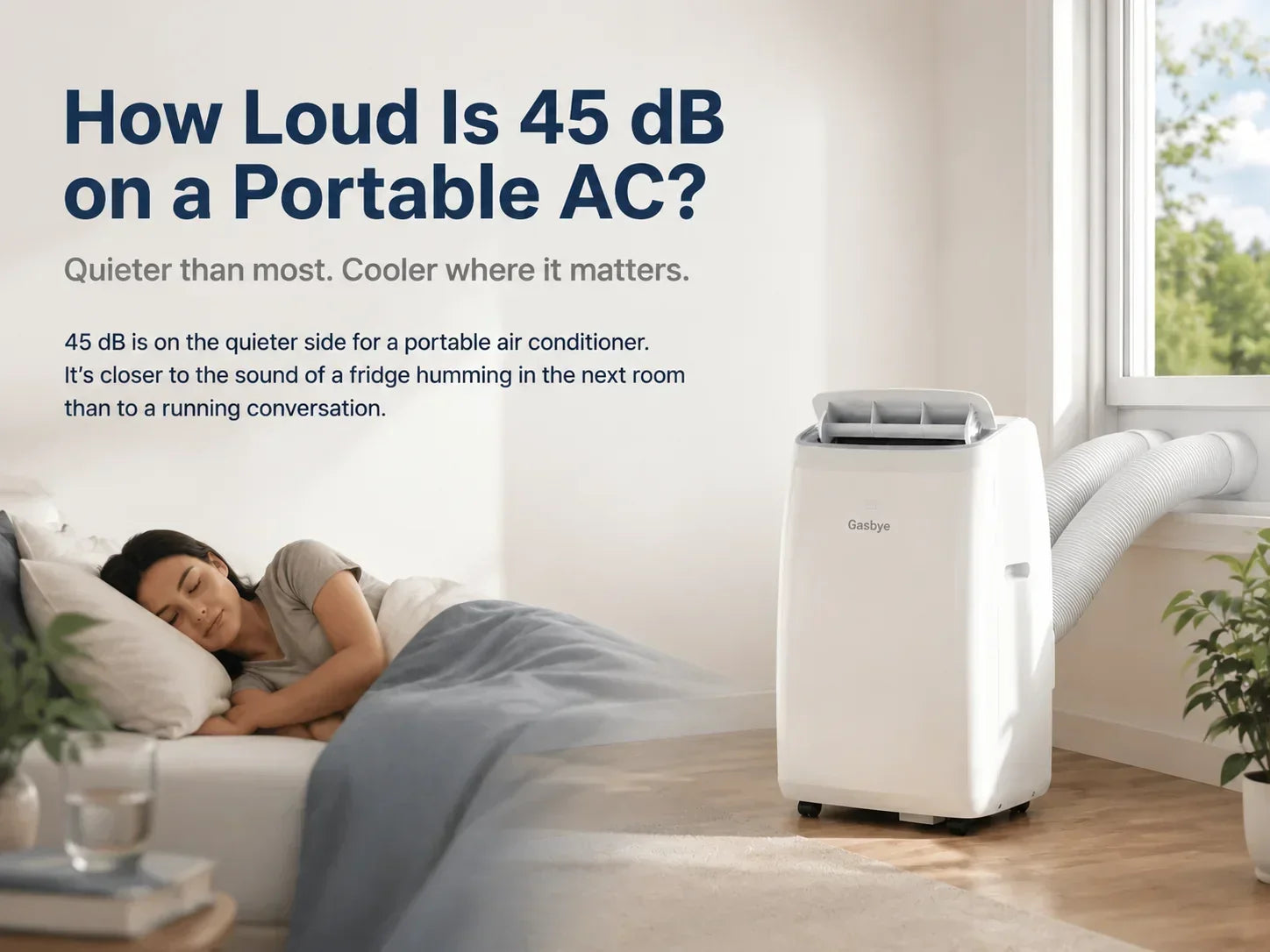
How Loud Is 45 dB on a Portable AC?
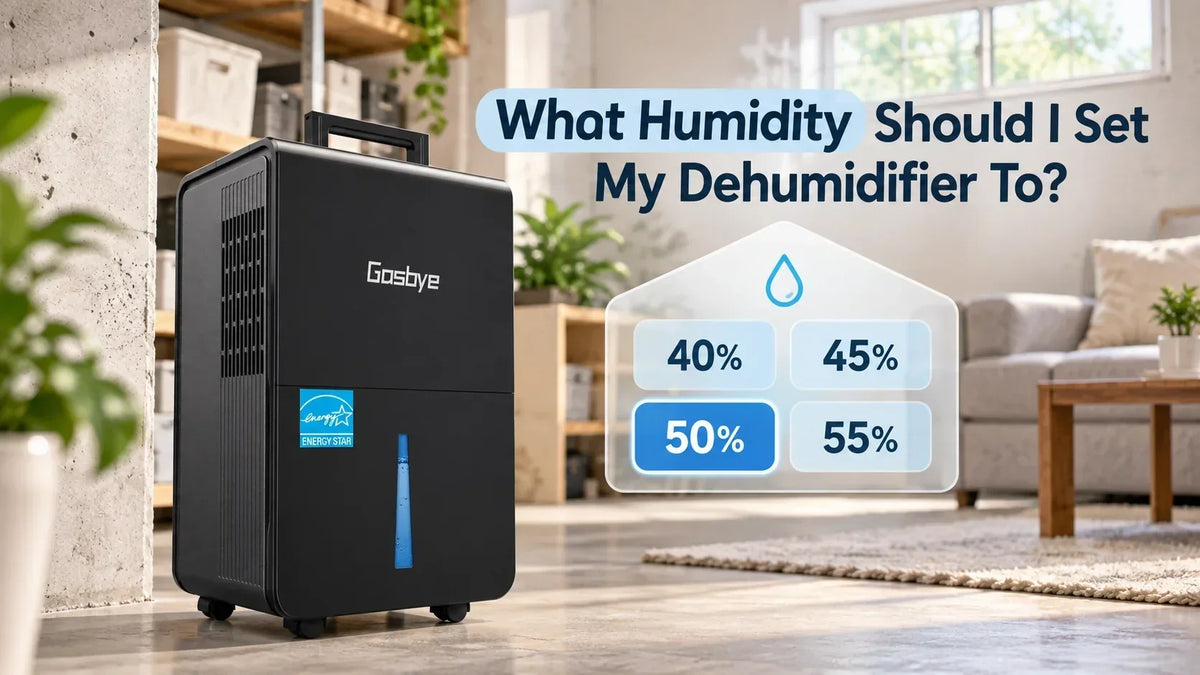
What Humidity Should I Set My Dehumidifier To?