
 Dehumidifiers
 Air Conditioners
 Vacuum Sealers
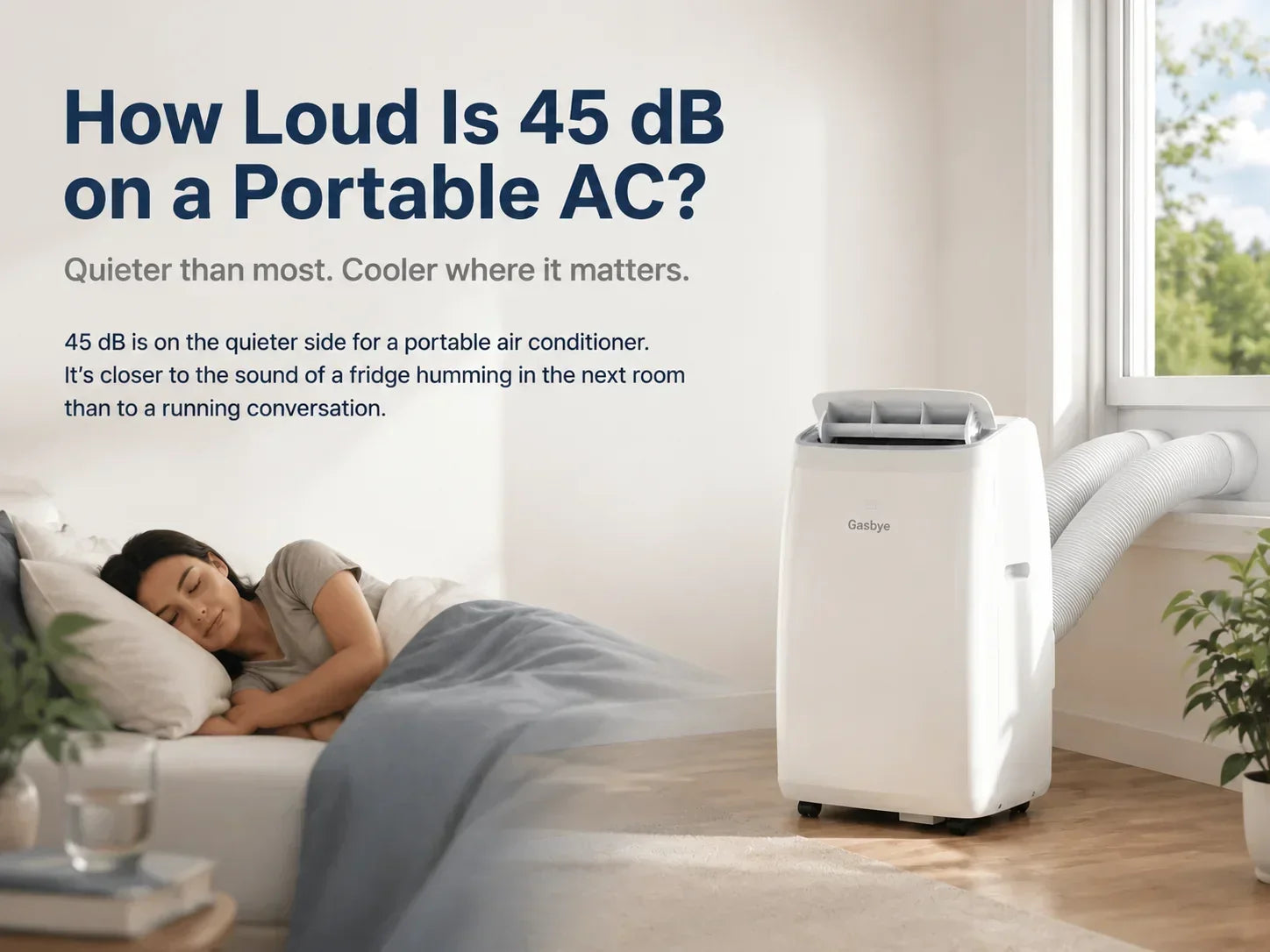
 No, 45 dB is on the quieter side for a portable air conditioner. Most portable units run between 55 and 70 dB, so 45 dB stands out — it's closer to the sound of a fridge humming in the next room than to a running conversation. But it's still worth understanding what that number really means before you count on it for a good night's sleep.
Why does this even matter?
If you've ever set up a portable AC in your bedroom, you know the feeling. The room cools down just fine. Then you turn off the lights, and there's this steady hum that won't quit. Some nights you don't notice it. Other nights it's the only thing you can hear.
This isn't something you did wrong. It's just how most portable ACs work.
Why are portable ACs louder than other cooling options?
Central air and mini-splits keep the noisiest part — the compressor — outside your house. You only hear the quiet part indoors: air moving through a vent.
A portable AC can't do that. The compressor, the fan, the whole noisy engine of the thing is sitting right there in your room with you. There's nowhere else for that sound to go. That's the real reason portable units tend to run louder than other types of AC — it's not a shortcut some brands take, it's just how the format works.
Some units handle this better than others. Ones built with a compressor that speeds up and slows down instead of switching fully on and off (usually called "inverter" models) tend to sound steadier — less like a machine kicking on and off, more like one low, constant hum. That doesn't make the noise disappear. It just makes it more even and easier to tune out.
What does the noise level on the box actually mean?
Here's something worth knowing: the number on the box doesn't always tell the whole story.
Testing that same unit can turn out different noise numbers depending on:
- Whether it's actually cooling, or just running the fan
- How close you're standing to it
- What fan speed it's running on
So two units that both say "50 dB" on the label might sound pretty different once you've got one running in your actual bedroom. It's not that the number is fake — it's that a single number, on its own, doesn't tell you everything.
Is there an official "quiet enough" number?
This is where it gets a little more honest than most articles online.
Health researchers who study noise and sleep say that for a bedroom, ongoing noise — the kind that runs all night, like an air conditioner — should stay under about 30 dB if you want zero disruption to your sleep.
You'll also see the number 45 dB thrown around a lot as a "quiet enough" benchmark. But that 45 dB guideline is actually meant for something different: a single, brief noise, like a door closing or a car passing outside — not a machine humming continuously for eight hours straight.
So, technically, nothing running all night in your bedroom is going to hit the "perfect" 30 dB mark — including most machines labeled "quiet." That's not a reason to panic. It just means the real question isn't "does this meet some official standard," it's "how far off is it, and can I live with that?"
A unit sitting around 45 dB is above that strict 30 dB target, but it's a lot closer to it than the 55–70 dB range most portable ACs fall into. Practically speaking, that's the difference between a low fridge hum and someone talking near your bed all night.
What does 45 dB actually sound like?
Numbers don't mean much without something to compare them to:
- A whisper is around 30 dB
- A fridge humming is around 40–45 dB
- Two people talking nearby is around 50–55 dB
- A dishwasher running is around 60 dB
- A vacuum cleaner is 70 dB or louder
So a unit in the mid-40s sounds a lot like a fridge running in the background — quiet as a humming fridge, not silent, but easy to stop noticing after a few minutes.
What people actually say once they've slept next to one
A lot of the real feedback we hear echoes this. People who were worried about noise before buying often say the same thing afterward: they forgot it was even running. Some say the inverter mode is so steady it just fades into the background, like a fan on low. Others mention that the loudest moment is right at the start, when the unit is working hardest to cool the room down — once it settles into a steady temperature, it gets noticeably quieter.
What can you do if noise still bothers you?
A few small things make a real difference:
- Move it a few feet from your bed. Sound drops off quickly with distance — even a foot or two helps.
- Check the exhaust hose isn't rattling. A loose hose knocking against a window frame adds noise that has nothing to do with the AC itself.
- Put a rubber mat under the unit. Hard floors carry vibration, especially wood or tile.
- Run it on a steady, lower setting instead of cranking the thermostat up and down. Constant noise is usually easier to sleep through than noise that keeps starting and stopping.
- Add a fan or white noise machine. A little steady background sound can actually make an AC's hum less noticeable, not more.
Quick answers
Q: Is 45 dB loud for a bedroom?
A: No — it's on the quiet side for a portable AC, closer to a humming fridge than a conversation. It's still above the strictest sleep guideline of 30 dB, but well below what most portable units run at.
Q: What's a normal noise level for a portable AC?
A: Most portable units run between 55 and 70 dB. Anything noticeably below that — especially in the mid-40s — stands out as quiet for the category.
Q: Does fan speed change how loud it sounds?
A: Yes. Lower fan speed usually means a lower number, but it can make the compressor's hum more noticeable since there's less fan noise to cover it.
Q: Are quieter portable ACs more expensive?
A: Not necessarily. Noise level mostly comes down to how the compressor is built, not the price tag — some higher-priced units are still loud, and some more affordable ones are quiet.
If bedroom noise is the main thing holding you back from a portable AC, it's worth looking for one that's quiet as a humming fridge rather than going by the number alone. Our CoolPrime lineup is part of our current seasonal sale — a good time to compare options if you're already in the market.


Share:
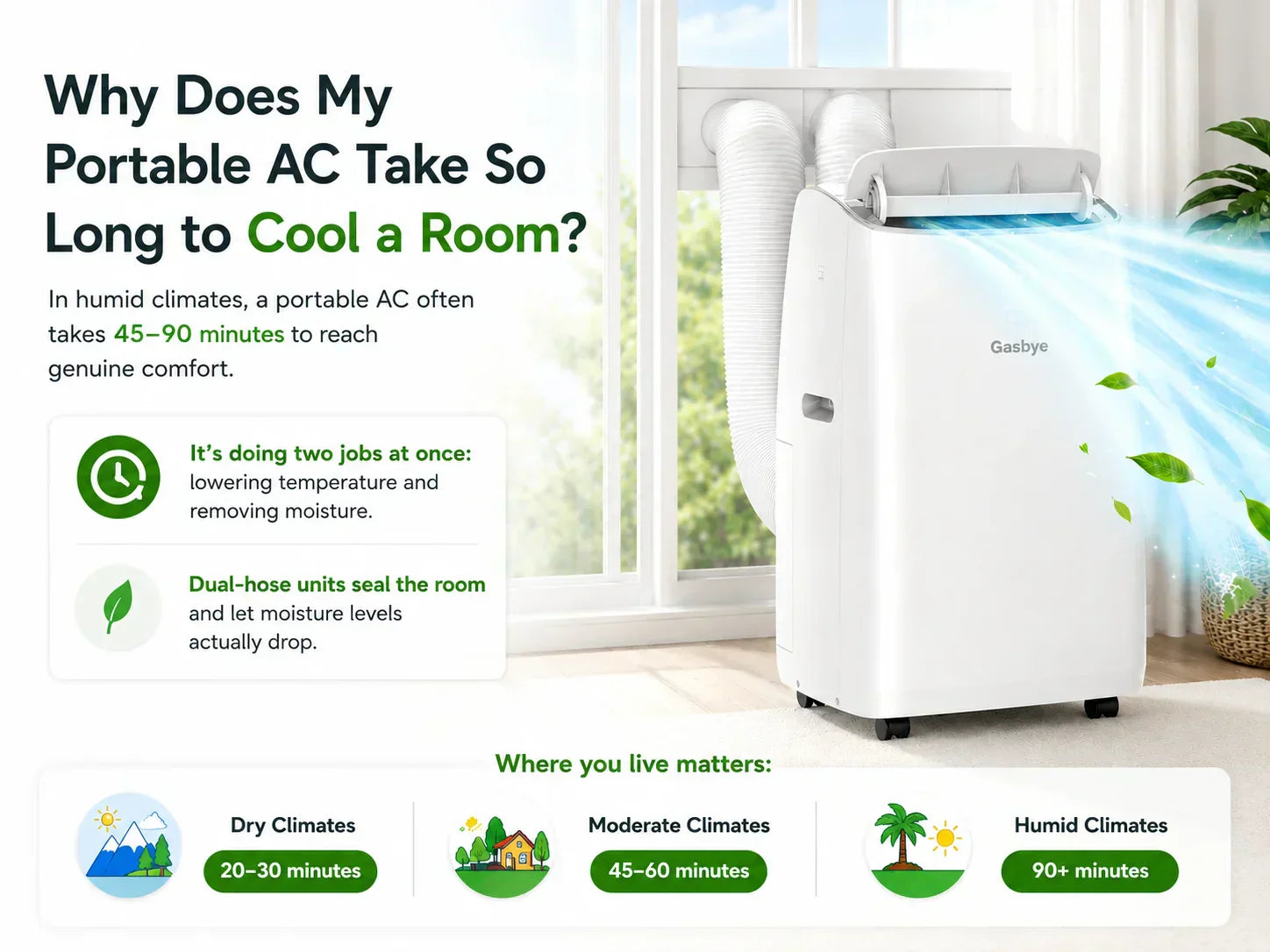
Why Does My Portable AC Take So Long to Cool a Room?
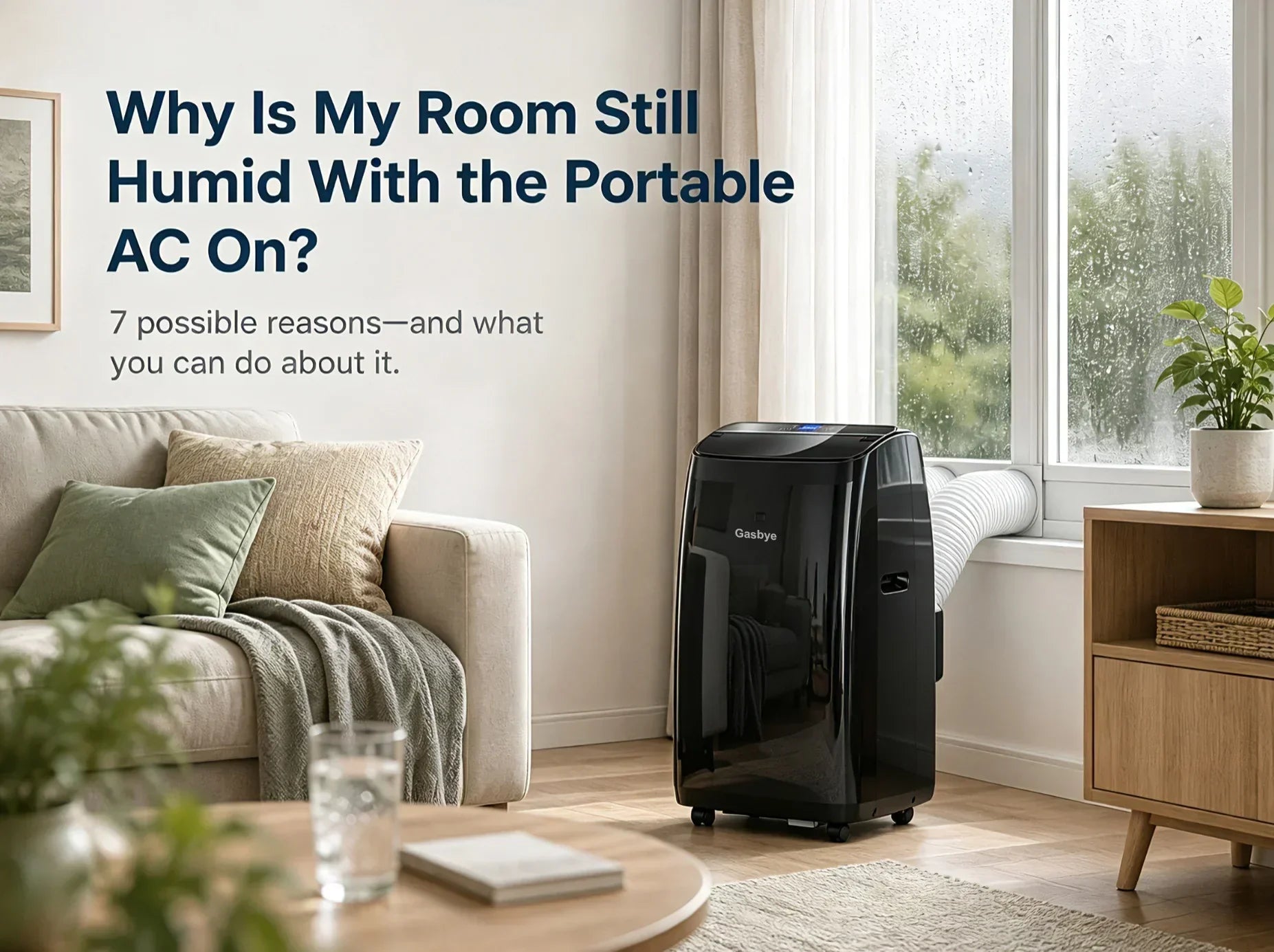
Why Is My Room Still Humid With the Portable AC On? 7 Possible Reasons