
 Dehumidifiers
 Air Conditioners
 Vacuum Sealers
As summer winds down, late August heat can still leave many American homes uncomfortable—especially in southern and coastal states. A portable air conditioner offers flexible cooling, but not all models are created equal. If you’re looking for efficiency, quiet operation, and real cooling power, a dual-hose inverter portable AC is the smart choice.
Why Consider a Portable AC in Late Summer?
Flexible Cooling: Unlike central AC, portable units can be moved to where you need cooling the most—bedrooms, basements, or even garages.
Energy Efficiency: Cooling a single room uses less energy than running a whole-house system.
Humidity Control: Many portable ACs also reduce indoor humidity, improving comfort and preventing mold growth.
What Makes Dual-Hose Cooling Different?
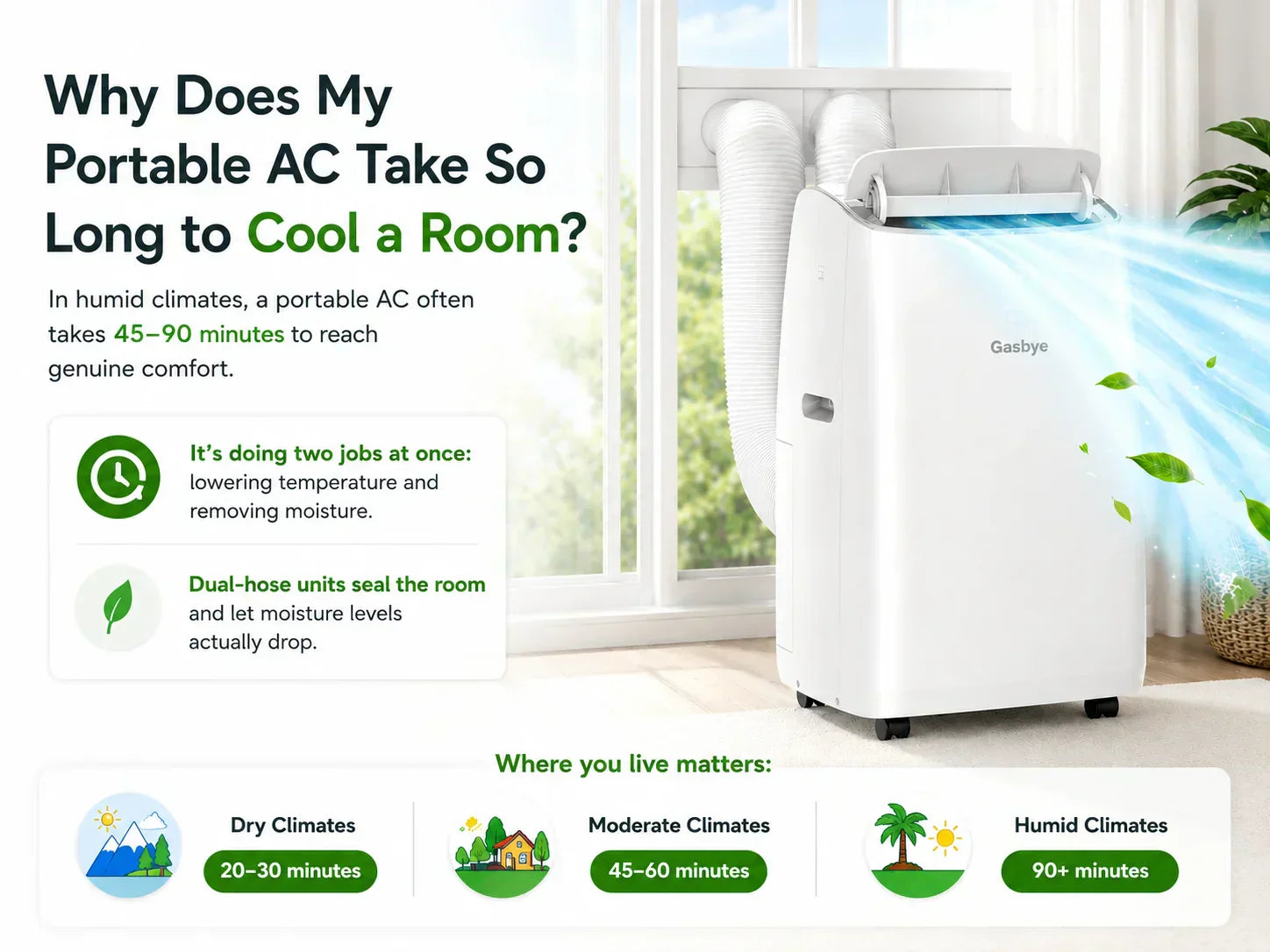
Most entry-level portable ACs use a single-hose system, which often creates negative air pressure. This can actually draw warm air back into your home, slowing cooling efficiency.
By contrast, our dual-hose system maintains balanced indoor pressure while bringing in and exhausting air more effectively. The result?
- Faster room cooling (60°F – 90°F)
- More stable indoor comfort
- Higher efficiency without wasted energy
Peak Energy Efficiency with Full DC Inverter Tech
Portable ACs are often criticized for high energy use. That’s where inverter technology changes the game:
-
Full DC Inverter Compressor: Actively adjusts cooling power based on real-time room needs.
-
13.6 CEER (DOE Verified): Among the highest in its class, meaning lower bills without sacrificing comfort.
-
Smart Energy Use: Turbo mode blasts cool air when daytime heat peaks; Inverter mode saves energy at night when less cooling is needed.
Unlike many brands that inflate BTU ratings, our unit provides a true 10,500 BTU SACC (14,000 BTU ASHRAE 128), capable of cooling up to 500 sq. ft.—perfect for bedrooms, living rooms, or even home offices.

Quiet Comfort: A Better Night’s Sleep
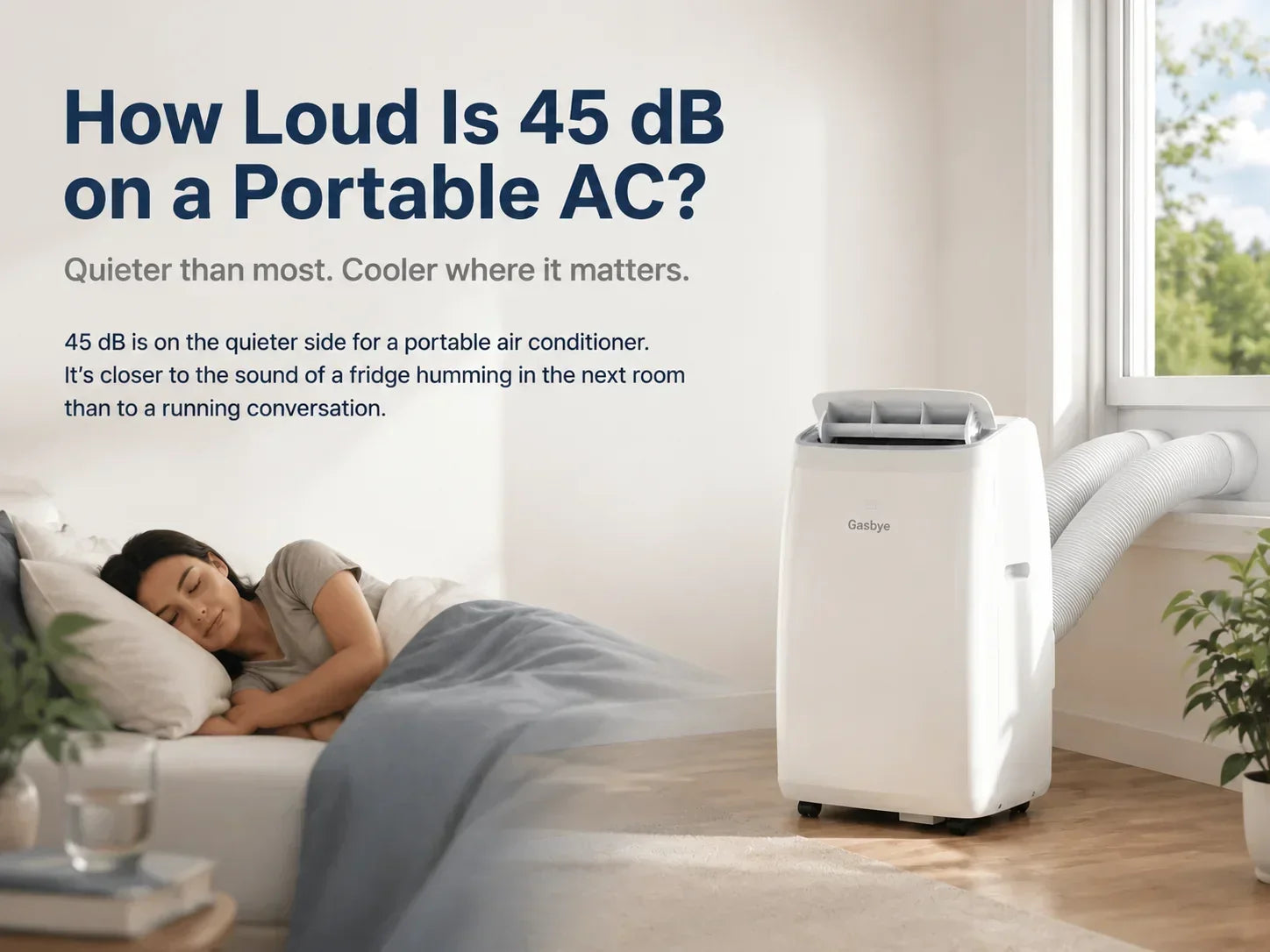
Compressor noise is a common complaint with traditional portable ACs. Thanks to inverter technology, our AC reduces compressor frequency within 2 minutes of use, lowering noise to just 45 dB—about as quiet as a library.
Pair this with a backlit remote control, and you’ll enjoy easy adjustments without getting out of bed or fumbling in the dark.
Why Size and Specs Matter
Some portable ACs advertise “14,000 BTU” while delivering far less in real-world performance. Our model is built honestly, without inflated numbers, which means:
-
A slightly larger size (15.5" D x 17.7" W x 29.3" H)
-
But true cooling capacity you can rely on
-
DOE-verified performance for peace of mind
When shopping for portable ACs, always compare SACC ratings (Seasonally Adjusted Cooling Capacity), not just marketing claims.
The Perfect Late-Summer Solution
Even as nights get cooler, daytime temperatures can remain high well into September. A dual-hose inverter portable AC gives you flexible cooling that adapts to changing conditions—saving energy when you need less, and delivering full power when you need more.
Not all portable ACs are built the same. By choosing a dual-hose model with full DC inverter technology, you get:
-
Faster cooling
-
Verified efficiency (13.6 CEER)
-
Whisper-quiet operation
-
Reliable capacity for rooms up to 500 sq. ft.
Questions You May Want To Know
Q1: What is the difference between dual-hose and single-hose portable air conditioners?
A1: Single-hose units are a cost-cutting design and work more like a fan that blows cool air, only cooling the area directly in front of the unit. They create negative pressure indoors, drawing hot outdoor air in through door cracks and window gaps, making it feel like you're cooling with an open door or window. Dual-hose systems, with two separate air circulation pathways, are true air conditioners that can cool the entire room efficiently and are more energy-efficient.
Q2: Does the Gasbye dual-hose inverter portable air conditioner require drainage in high humidity?
A2: In most cases, portable ACs do not require manual drainage. But if the humidity is over 85% RH and the room isn’t sealed, moisture from outside can 𝗰𝗼𝗻𝘁𝗶𝗻𝘂𝗼𝘂𝘀𝗹𝘆 𝗲𝗻𝘁𝗲𝗿, which may exceed the unit’s auto-evaporation capacity and require manual drainage. In such cases, unlike many portable ACs with drainage outlets at the bottom, our unit includes an additional drainage outlet positioned higher on the back, making the process much easier.
Q3: What do the 14,000 BTU (ASHRAE 128) and 10,500 BTU (SACC) ratings mean for the Gasbye Dual Hose Portable AC?
A3: The cooling capacity of an air conditioner is influenced by the current temperature; the higher the temperature, the greater the challenge for the unit. ASHRAE 128 measures cooling capacity at 80°F, while SACC uses higher temperatures and stricter conditions, making it a more realistic measure of performance. Therefore, the SACC rating is usually lower but provides a more accurate assessment of the unit’s cooling efficiency in real-world conditions. Even for units rated at 14,000 BTU under ASHRAE 128, their SACC ratings can vary significantly. Since we don’t inflate the BTU rating of our unit, its size may be larger compared to some other "mini" models that falsely advertise 14,000 BTU. Its dimensions are 15.5" D x 17.7" W x 29.3" H
Ready to upgrade your comfort?
Explore our CoolPrime Series today and experience the difference that real efficiency makes.
Share:
Where to Put a Dehumidifier: 5 High-Moisture Spots in Your Home
The Complete Guide for Choosing and Using a Dehumidifier