
 Dehumidifiers
 Air Conditioners
 Vacuum Sealers
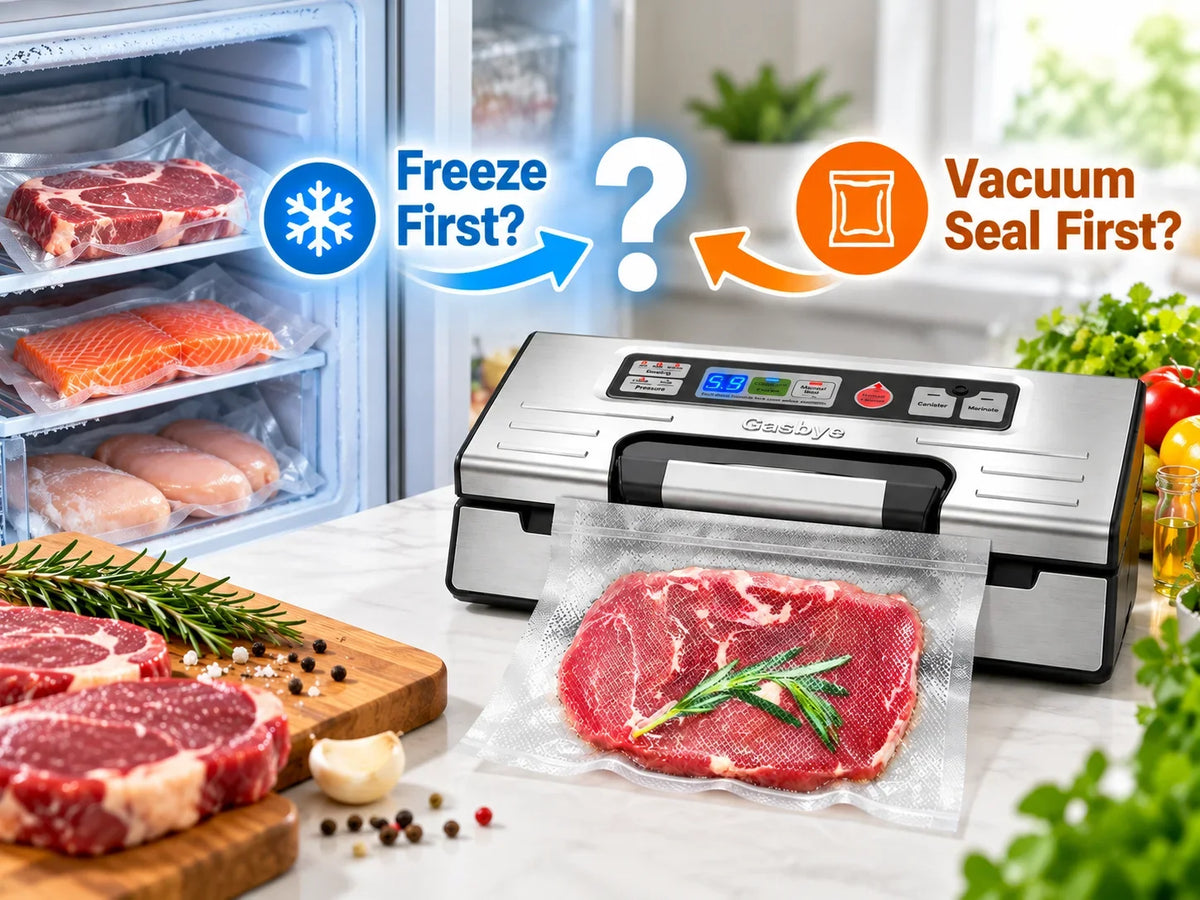
If you're preparing food for the freezer, you may wonder which should come first: freezing or vacuum sealing.
For most foods, you do not need to freeze them before vacuum sealing. But pre-freezing can make sealing easier when food is very juicy, soft, or likely to release liquid.
The key is not whether the food will eventually be frozen. It is whether freezing it first helps you get a cleaner, more reliable seal.
Quick Answer: Should You Freeze Food Before Vacuum Sealing It?
Usually, no.
Firm foods with little surface moisture can normally be vacuum sealed first and then frozen.
Pre-freezing is most useful for:
-
Juicy meat or fish
-
Marinated foods
-
Soft foods that may be crushed
-
Foods that release liquid during vacuuming
With a suction-style vacuum sealer, partially freezing these foods can help keep moisture away from the sealing area.
You usually do not need to freeze the food solid. In many cases, you only need it firm enough that juices stay in place while the air is removed.
Do You Have to Freeze Food Before Vacuum Sealing?
No.
Pre-freezing is mainly a practical sealing technique. It is not a required step for every food.
A typical suction vacuum sealer removes air through the open end of the bag. If the food is dry and firm, that process is usually straightforward.
Problems can start when the food releases liquid.
As air moves toward the machine, moisture can move with it. If liquid reaches the sealing area, it may make it harder to create a clean seal.
Freezing the food briefly first can slow that movement.
That is why pre-freezing is useful for some foods but unnecessary for others.
Why Does Pre-Freezing Help?
There are three main reasons.
It keeps juices away from the seal
Fresh meat, fish, and marinated foods can release moisture when vacuum pressure is applied.
If that liquid travels toward the open end of the bag, it can wet the area where the machine needs to create the heat seal.
Partially freezing the food makes those juices less likely to move.
It can help create a cleaner seal
A clean, dry bag opening is important for reliable sealing.
If moisture or food residue gets between the layers of the bag, the seal may be weaker or incomplete. Bag compatibility and material also matter, so it helps to understand how to choose the right vacuum sealer bags for your machine.
Pre-freezing does not guarantee a perfect seal, but it can make wet foods easier to manage.
It helps soft foods hold their shape
Vacuum pressure can compress delicate foods.
Partially freezing them first makes them firmer, so they are less likely to flatten while the machine removes air.
This can be useful for foods such as soft baked goods, berries, or prepared foods that you want to keep intact.
Should You Freeze Meat Before Vacuum Sealing?
Not always.
If the meat is firm and relatively dry on the surface, you can usually vacuum seal it first and then place it in the freezer.
Pre-freezing becomes more useful when the meat is very juicy.
Examples include:
-
Fresh steaks with a lot of surface moisture
-
Ground meat
-
Fresh fish
-
Meat in marinade
-
Recently portioned meat that is releasing juices
Some suction vacuum sealer manufacturers recommend pre-freezing moist meat for roughly 1–2 hours before sealing.
That does not mean every piece of meat needs exactly two hours in the freezer.
The goal is simpler:
Let the surface and juices become firm enough that they do not get pulled toward the seal.
If the meat is already easy to vacuum seal without liquid moving up the bag, there is little reason to add an extra freezing step.
How Long Should You Pre-Freeze Meat Before Vacuum Sealing?
There is no universal time that works for every food.
For many pieces of meat, around 1–2 hours may be enough to firm the surface and partially freeze the juices.
Thickness matters.
A thin chicken breast may firm up much faster than a thick steak or a large portion of ground meat.
Instead of watching the clock alone, check the food itself.
It is ready to vacuum seal when:
-
The surface feels noticeably firmer
-
Loose juices are starting to freeze
-
Liquid no longer flows easily when the food is tilted
-
The food is still easy to position inside the bag
You usually do not need to wait until the entire piece is frozen solid.
Should You Freeze Fish Before Vacuum Sealing?
Fish is one of the foods that often benefits from a short pre-freeze.
Fresh fish can release a significant amount of moisture during vacuuming. That liquid may travel toward the open end of the bag before the machine has finished removing the air.
Partially freezing the fish first can make the process easier.
You can also pat excess surface moisture away before putting the fish into the bag.
If you see liquid moving rapidly toward the machine during vacuuming, stop the cycle rather than letting moisture enter the vacuum channel. Let the fish firm up further before trying again.
Can You Vacuum Seal Food That Is Already Frozen?
Yes.
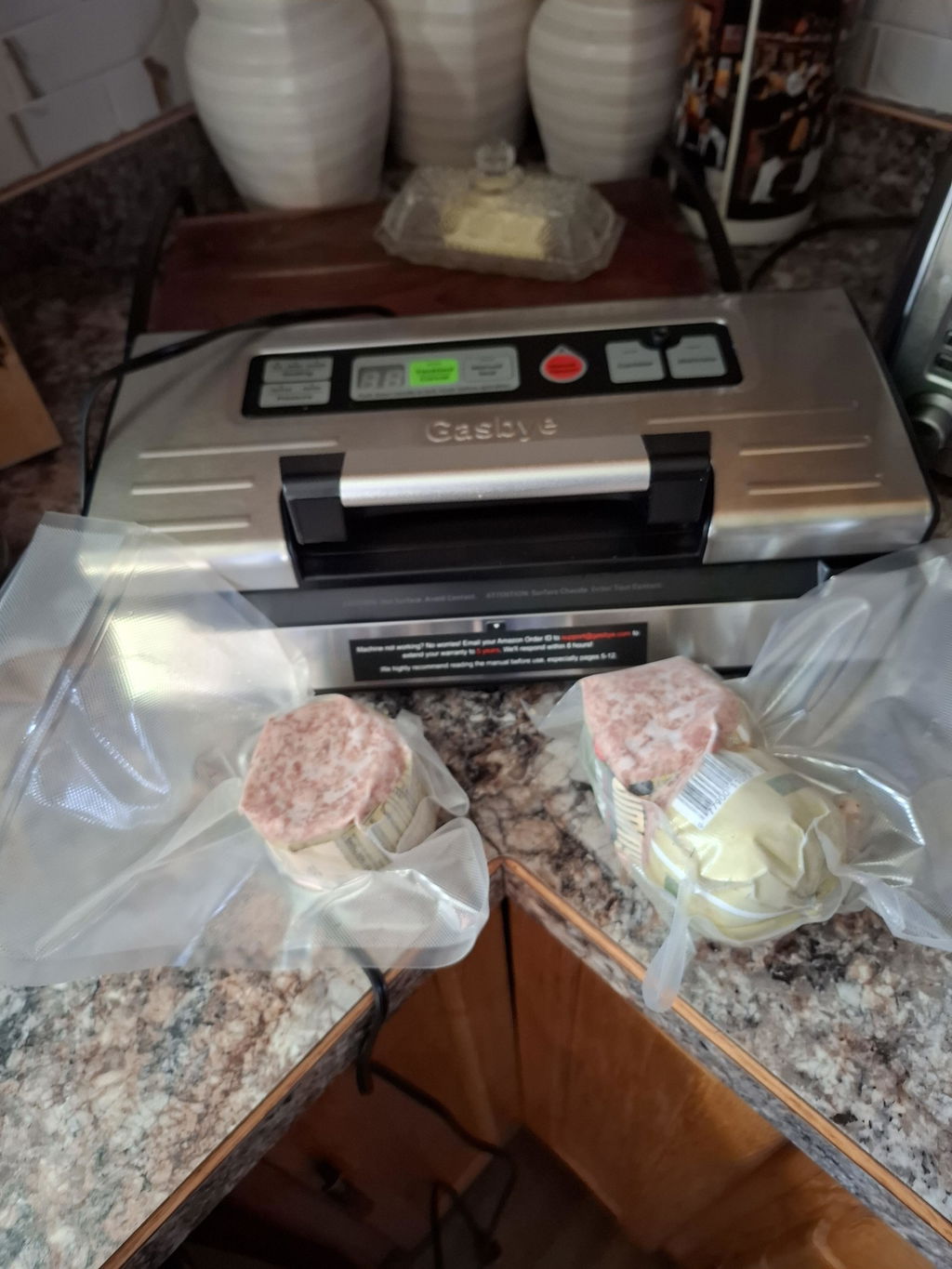
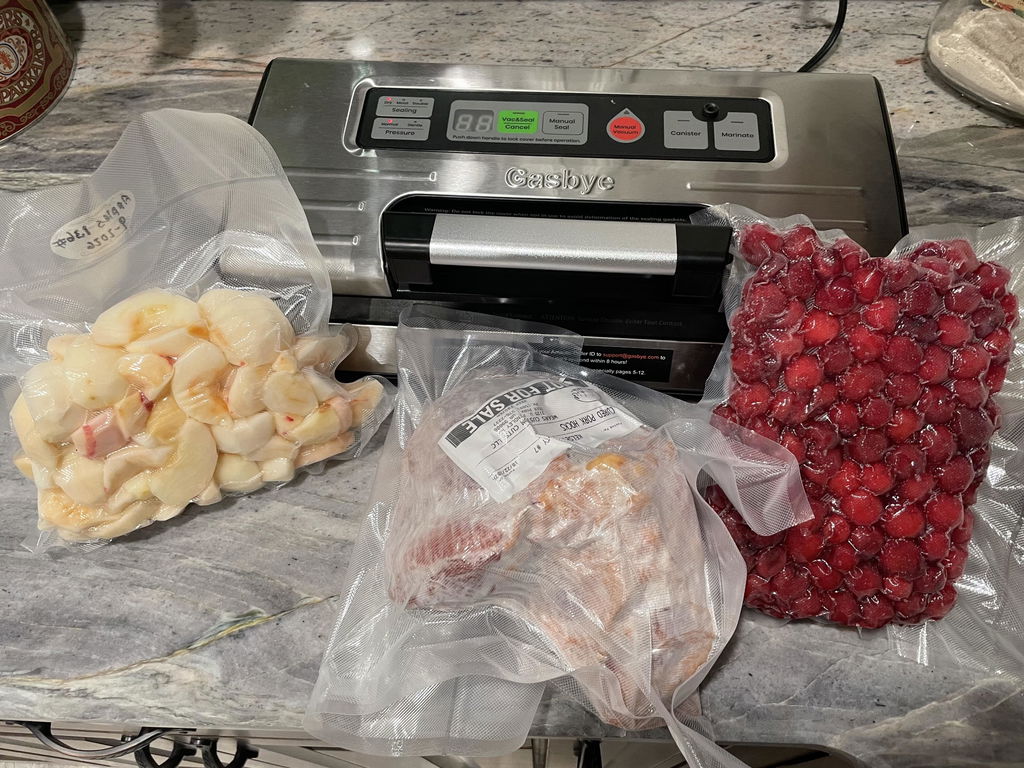
There is nothing wrong with vacuum sealing food after it has already been frozen.
This can actually be convenient when you want to freeze something in portions first and package it later.
Before sealing, check for sharp ice crystals or hard frozen edges that could puncture the bag.
Also make sure the open end of the bag stays clean and dry.
One potential downside is that freezing food before it is protected from air can allow some surface drying to begin. So if the food does not need to be frozen first for easier handling, sealing it before long-term freezing is usually simpler.
What About Soft or Delicate Foods?
Soft foods do not always need to be frozen, but vacuum pressure can change their shape.
Bread, baked goods, berries, and other delicate foods may flatten as the bag tightens around them.
Partially freezing them first can help.
You can also use a vacuum sealer with more manual control.
For example, the Gasbye VS5166 includes a pulse vacuum function, which lets you control air removal more gradually instead of automatically pulling the maximum possible vacuum.
That can be useful when sealing foods that you do not want to crush.
Pre-freezing and pulse control solve the same basic problem in different ways: they give you more control over what happens to the food while air is being removed.
What About Soup, Sauce, and Other Liquids?
This is one case where the type of vacuum sealer matters.
With a typical external suction sealer, free-flowing liquids can be pulled toward the machine. Freezing soup, broth, gravy, or sauce first is usually the simplest approach.
A chamber vacuum sealer works differently and can handle many liquids without pre-freezing.
If you regularly seal liquid foods, this is less a question of how long to pre-freeze and more a question of which type of vacuum sealer fits your needs.
For a more detailed explanation, see our guide to freezing soups, sauces, and holiday leftovers.
Vacuum Seal First or Freeze First?
Use this simple rule:
-
Dry and firm food: Vacuum seal first.
-
Juicy meat or fish: Partially freeze first if liquid moves during vacuuming.
-
Marinated food: Pre-freezing can make sealing easier.
-
Soft or crushable food: Partially freeze it or use controlled vacuuming.
-
Already frozen food: It can be vacuum sealed as-is.
-
Soup or other free-flowing liquid: Freeze first when using a suction sealer.
The best order depends on how the food behaves during vacuuming.
If it stays firm and dry, there is usually no reason to freeze it first.
If it releases liquid or changes shape, pre-freezing can make the process easier.
Is Pre-Freezing a Food Safety Step?
Not by itself.
Pre-freezing mainly helps with handling and sealing.
Vacuum sealing does not make perishable food shelf-stable, and it does not replace proper refrigeration or freezing. If you want to understand what vacuum sealing can and cannot do for storage life, see our guide to how vacuum sealing affects food freshness.
Meat, fish, cooked foods, and other perishables still need to be stored at safe temperatures.
That distinction matters because a good-looking vacuum seal does not tell you whether a food has been handled safely.
Think of pre-freezing as a way to improve the sealing process—not as a food-safety shortcut.
Final Takeaway
You do not need to freeze most foods before vacuum sealing them.
Start with the simplest approach: vacuum seal the food directly.
If juices move toward the seal, the food gets crushed, or the bag opening becomes difficult to keep dry, try partially freezing the food first.
For meat and fish, that may mean roughly 1–2 hours. For soft foods, it may only mean enough time to make them firm.
The goal is not to freeze everything.
The goal is to make the food easier to seal.
You may wanna know
1. Can I vacuum seal meat without freezing it first?
Yes. Meat can usually be vacuum sealed before freezing. Pre-freezing is most useful when the meat is very wet or juicy and liquid moves toward the sealing area.
2. How long should I pre-freeze meat before vacuum sealing?
Around 1–2 hours is a common manufacturer recommendation for moist meat, but thickness and food type matter. The food only needs to become firm enough that juices stay in place during vacuuming.
3. Do I have to freeze meat solid before vacuum sealing?
No. Partial freezing is usually enough. The goal is to firm the surface and moisture, not necessarily freeze the entire piece.
4. Can I vacuum seal meat that is already frozen?
Yes. Frozen meat can be vacuum sealed. Check for sharp ice crystals that might puncture the bag and keep the sealing area clean and dry.
5. Why is liquid getting pulled into my vacuum sealer?
External suction sealers remove air through the open end of the bag, so moisture can move toward the machine along with the air. Partially freezing wet food can help keep that liquid in place.



Share:
What Humidity Should I Set My Dehumidifier To?