
 Dehumidifiers
 Air Conditioners
 Vacuum Sealers
Dehumidifier Terms
-
Compressor Dehumidifier – Uses a refrigeration compressor to condense moisture from the air. Efficient for medium to large rooms; may produce some operational noise (~43–45 dB).
-
Semiconductor / Desiccant Dehumidifier – Uses a chemical desiccant or semiconductor technology to absorb moisture. Quieter and suitable for small spaces or cooler climates, but less moisture removal.
-
Pint/Day – Measurement of how much moisture a dehumidifier removes in 24 hours. Example: DryPrime-50 removes up to 115 pints/day at 86°F, 80% RH.
-
Built-in Pump – Enables water to be pumped upward or over long distances, rather than relying on gravity drainage. Removable pumps allow cleaning or replacement without changing the whole unit.
-
Corrosion Protection – Design or coating applied to metal parts to prevent rust and extend the unit’s lifespan in humid environments.
-
Auto Humidity Control – Built-in humidistat that turns the unit on or off to maintain a target relative humidity (RH).
-
Energy Star – U.S. government certification for energy-efficient appliances. Gasbye DryPrime models are certified Most Efficient 2024.
-
Tank Capacity – Size of the water collection tank. Larger tanks reduce the frequency of manual emptying.
Portable Air Conditioner Terms
-
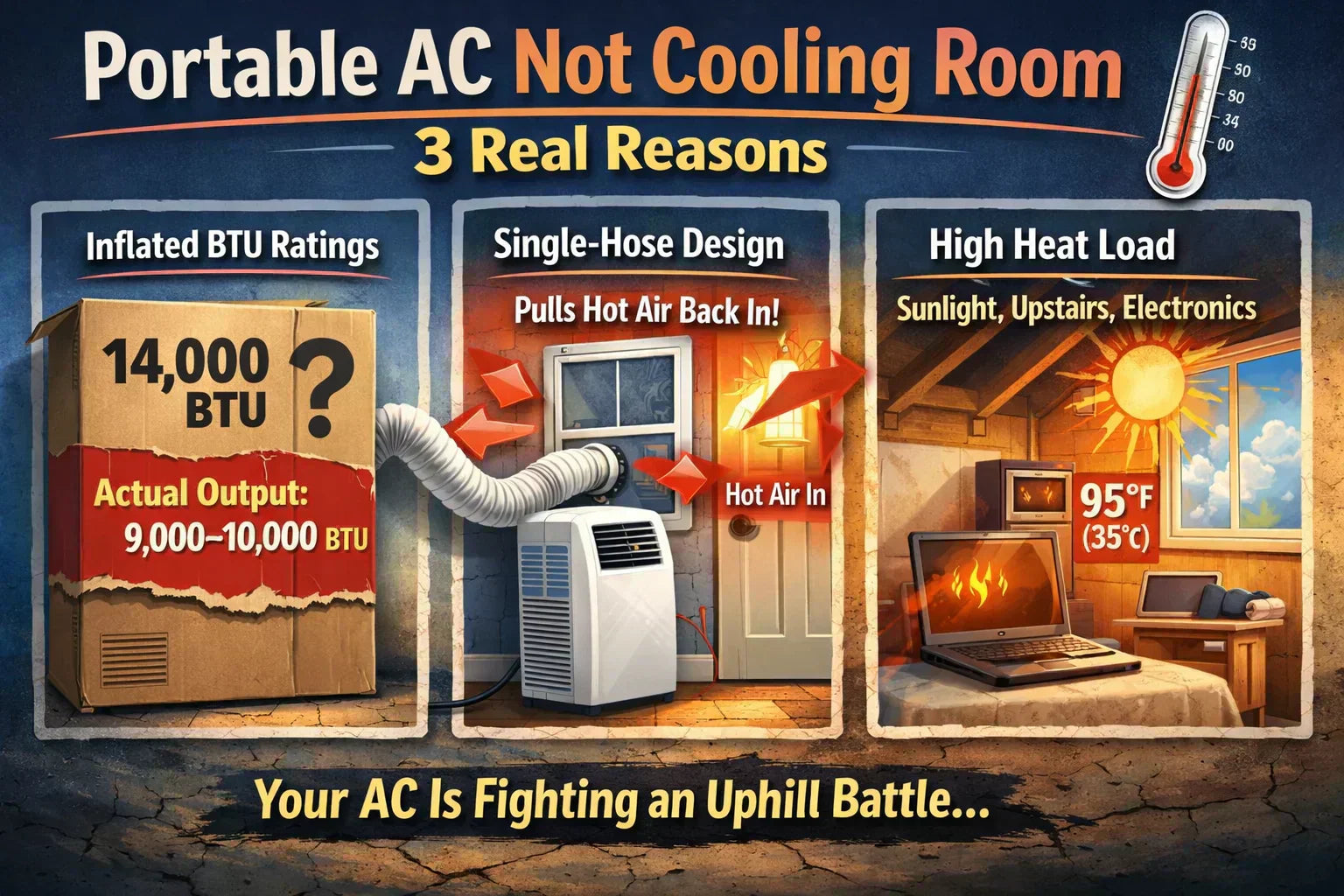
BTU (British Thermal Unit) – Measures cooling or heating capacity. Example: DryPrime 10,500 BTU SACC (14,000 BTU ASHRAE 128) portable AC.
-
CEER (Combined Energy Efficiency Ratio) – DOE-verified rating of energy efficiency for portable ACs.
-
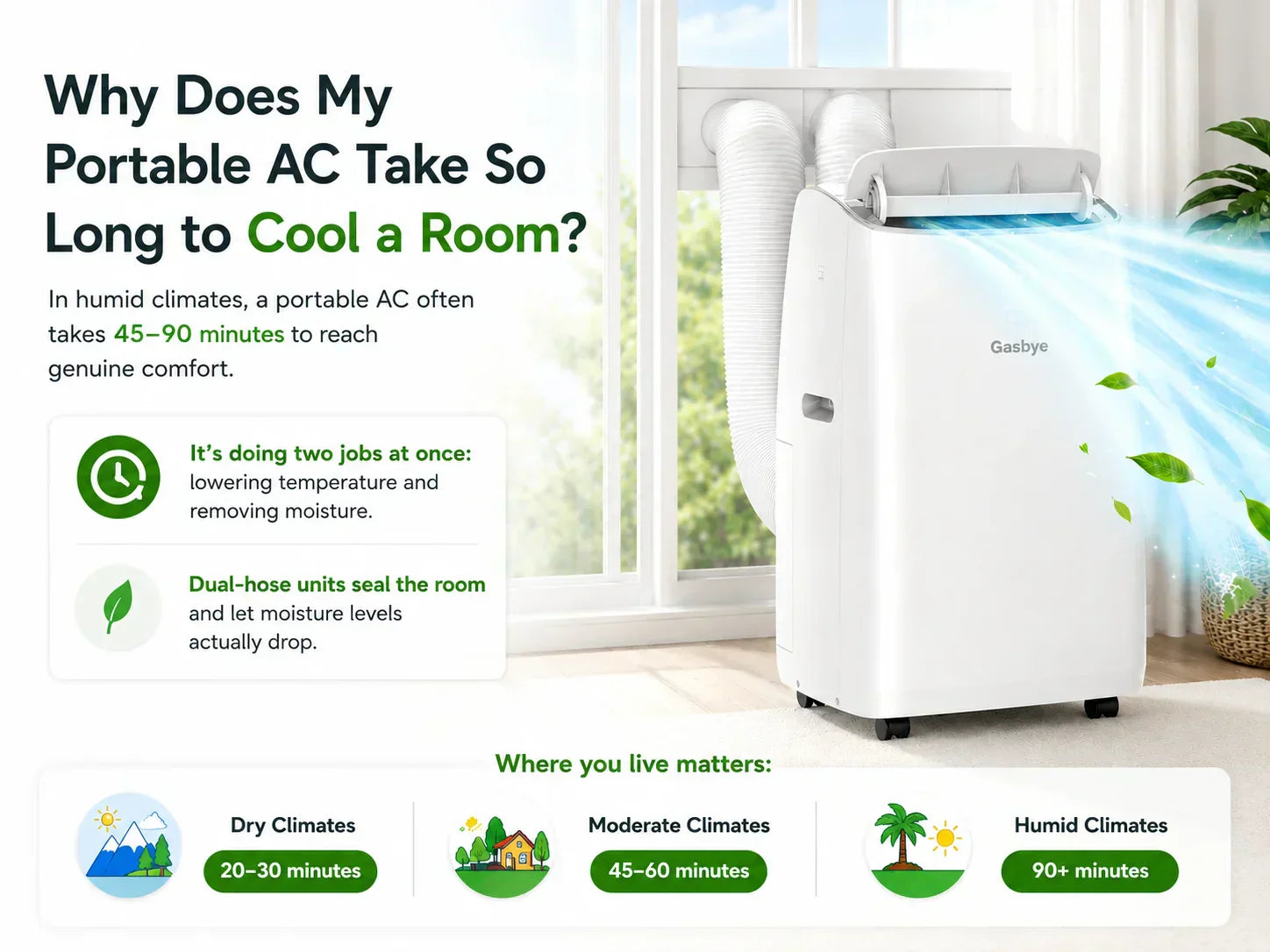
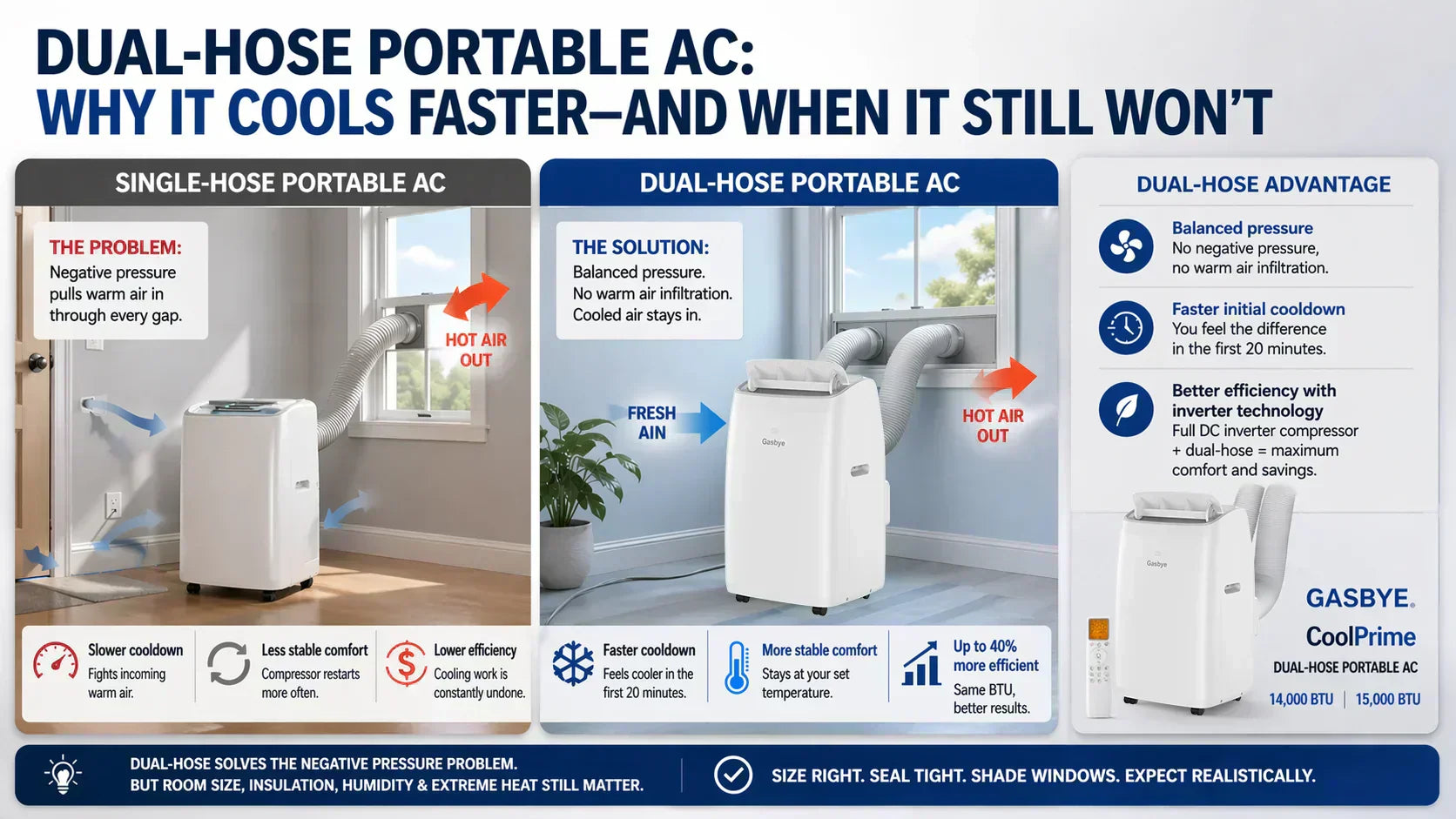
Dual-Hose System – Uses one hose to draw in air and another to expel exhaust, preventing negative pressure and improving cooling efficiency.
-
Inverter Technology – Adjusts compressor speed to match cooling demand, reducing energy use and noise.
-
Turbo Mode – Provides maximum cooling for rapid temperature reduction.
-
Night / Inverter Mode – Reduces compressor load at cooler nighttime temperatures to save electricity.
-
Backlit Remote – Remote control with illuminated display for easy nighttime operation.
Vacuum Sealer Terms
-
Heat Seal – The process of sealing a bag by applying heat to fuse plastic layers together. Dual heat seals improve reliability.
-
Vacuum Suction (kPa) – Measurement of vacuum pump strength; e.g., 95 kPa indicates powerful suction for tight seals.
-
Removable Drip Tray – Collects overflow from juicy or marinated foods, simplifying cleanup.
-
Vacuum Food Container – Specialized container compatible with the vacuum sealer, allowing liquids or sauces to be sealed without loss.
-
Starter Kit – Includes basic accessories like pre-cut bags, rolls, and gaskets to start vacuum sealing immediately.

Share:
Fall Humidity Problems: Why Autumn Air Isn’t As Dry As You Think
Vacuum-Sealed Food: Does It Really Stay Fresh Longer? The Truth Might Surprise You