

Excess indoor humidity can make a home feel uncomfortable and may contribute to mold, musty odors, and moisture damage. A dehumidifier removes excess moisture from the air, helping maintain healthier indoor humidity levels and improving overall comfort.
But with so many models and sizes available, choosing the right dehumidifier can feel confusing. Capacity ratings, room size recommendations, and additional features can vary widely between models.
This simple guide will help you understand what to look for so you can choose the right dehumidifier for your space.
Quick Guide to Choosing the Right Dehumidifier
Up to 300 sq ft
- Recommended capacity: 20–25 pint
- Typical spaces: bathrooms, closets, RVs
300–500 sq ft
- Recommended capacity: 30–35 pint
- Typical spaces: bedrooms, home offices
500–1500+ sq ft
- Recommended capacity: 50 pint or higher
- Typical spaces: basements, living rooms, large areas
Rule of thumb
- Light humidity → a smaller unit may be enough
- Persistent humidity → choose a larger capacity
- Slightly oversizing often improves performance

1. Start With the Size of Your Room
The first step in choosing a dehumidifier is understanding the size of the space where it will be used.
Manufacturers typically rate dehumidifiers by the number of pints of moisture they can remove in 24 hours, along with an estimated coverage area.
Common room size examples:
-
Small spaces (up to 300 sq ft): Bathrooms, laundry rooms, RVs, or closets.
-
Medium rooms (300–500 sq ft): Bedrooms, home offices, and small living areas.
-
Large spaces (500–1500+ sq ft): Basements, large living rooms, or open-plan areas.
If the space tends to be particularly damp, poorly ventilated, or located in a basement, choosing a slightly larger capacity unit is often recommended.
2. Choose the Right Moisture Removal Capacity
The next factor to consider is the daily moisture removal capacity, usually expressed in pints per day. Typical household ranges include:
- 20–25 pint: ideal for slightly damp rooms
- 30–35 pint: good for bedrooms and small basements
- 50+ pint: best for large spaces, high humidity, or frequent moisture buildup
Higher capacity units can remove moisture more quickly and are better suited for consistently humid environments.
When in doubt, many homeowners prefer to select a slightly larger unit to ensure more effective humidity control.
3. Look for Useful Features
Beyond size and capacity, certain features can make a dehumidifier much easier to use on a daily basis. Common features to consider include:
Auto shut-off
Automatically stops operation when the water tank becomes full.
Built-in humidistat
Allows you to set your desired humidity level so the unit runs only when needed.
Timer function
Lets you schedule operation times for energy efficiency and convenience.
Quiet operation
Important if the unit will be placed in bedrooms or living spaces.
Continuous drainage
Allows water to drain through a hose rather than manually emptying the tank.
These features do not directly affect moisture removal performance, but they can significantly improve convenience and day-to-day usability.
Gasbye dehumidifiers come with all of the above—because you shouldn’t have to compromise on comfort.
4. Compressor vs. Desiccant: What’s the Difference?
Most residential dehumidifiers fall into one of two categories.
Compressor Dehumidifiers
Compressor-based models are the most common type in North America.
Advantages include:
-
Strong moisture removal capacity
-
Better energy efficiency in warm environments
-
Suitable for basements and larger rooms
Because of their efficiency and capacity, compressor units are the most widely used type in homes across the United States.
Desiccant Dehumidifiers
Desiccant models use moisture-absorbing materials rather than refrigeration.
Typical characteristics include:
-
Quieter operation
-
Effective in lower temperatures
-
Usually smaller capacity
These models are sometimes used in cooler environments or small enclosed spaces.
5. Consider Maintenance and Long-Term Convenience
A dehumidifier may run for many hours each day, especially during humid seasons. Choosing a model that is easy to maintain can make long-term use much easier.
Some practical design considerations include:
Removable, washable filters
Helps keep the unit running efficiently and improves air quality.
Larger water tanks
Reduces how often the tank needs to be emptied.
Continuous drainage options
Allows the unit to run longer without manual intervention.
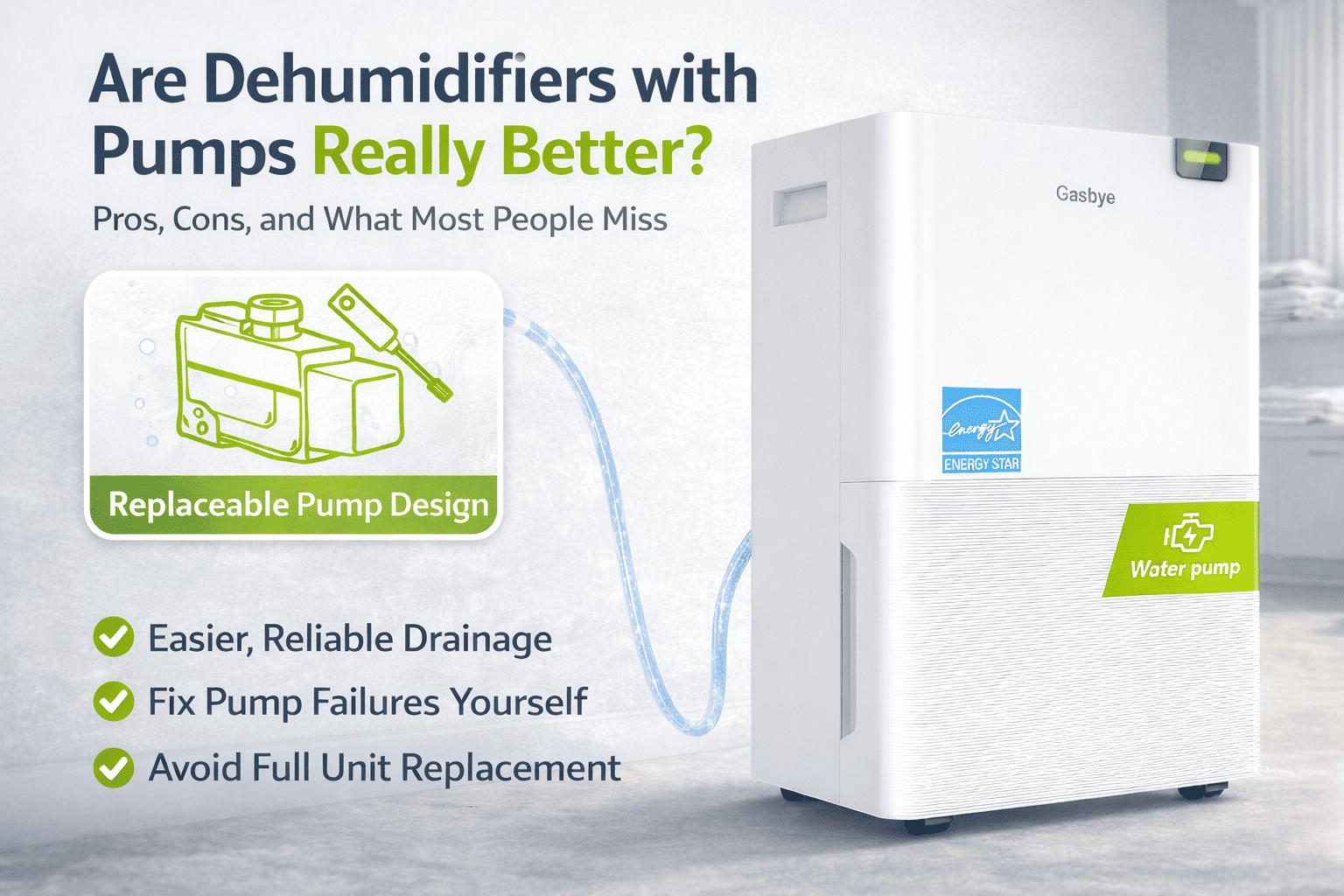
Some models also include built-in pumps, which allow water to be pumped upward to a sink, drain, or window when gravity drainage is not possible.
These features can make a significant difference in convenience, particularly in basements or spaces where frequent tank emptying would be inconvenient.
Key Takeaways
-
Match the pint capacity to the size of the room.
-
Larger or more humid spaces typically require 50-pint or higher units.
-
Compressor dehumidifiers are the most common choice for homes.
-
Features like continuous drainage or pump drainage can make long-term use much easier.
Frequently Asked Questions
1.What size dehumidifier do I need for a basement?
Most basements benefit from a 50-pint or larger dehumidifier, especially if humidity levels regularly exceed 60%.
2. Is a dehumidifier with a pump worth it?
A built-in pump allows water to be drained vertically to a sink, window, or drain, which is useful when gravity drainage is not possible.
3. How long should a dehumidifier run each day?
Depending on humidity levels and room size, most dehumidifiers run 8–12 hours per day to maintain ideal humidity levels between 40% and 50%.
4. What humidity level should I maintain at home?
Most experts recommend keeping indoor humidity between 40% and 50% for comfort and to help prevent mold growth.
If you're looking for reliable moisture control for basements, bedrooms, or large living spaces, choosing the right size and features can make a significant difference in comfort and long-term performance.
Final Tip: Match the Unit to Your Needs
No one wants to overspend or under-buy. Think about where you’ll use the dehumidifier, how often, and what matters most—power, quiet operation, or low maintenance?
Still unsure which model to pick? Our quick quiz can help, or contact our support team for a personalized recommendation.


Share:
Why a Dehumidifier Is a Must-Have for American Homes in Humid Climates?
Top 5 Places in Your Home That Need a Dehumidifier